
Nowhere Else on Earth: A Case for the Ground Under Middle Tennessee
I want to start with the cedar glades, because they're the reason I started paying attention.

There are flowers growing in Davidson, Rutherford, and Wilson counties that grow nowhere else on the planet. Not rare in Tennessee. Not mostly found in the Southeast. Nowhere else. You could search every continent, every mountain range, every other patch of limestone on Earth, and you would not find a wild Tennessee coneflower. It lives here, in these rocky clearings outside Nashville, and that is the entire list.

Most of us drive past these places without a second thought. They're the flat, scrubby, rock-strewn openings you see off the county roads, and they read as wasteland. Nothing growing there, right? Mow it, pave it, move on. In fact those "empty" patches are one of the most botanically distinctive habitats in North America.
I took a walk through the Cedars of Lebanon State Park recently and it felt anything but "empty". Skippers flitted around the open clearings, hopping from one distinctive bloom to another. Woodpeckers twirled around branches of cedar while deer pranced through their commonly used trails. Birds of prey dove from high canopies into openings of dense native plants and shrubs while mice and voles scurried through the endless maze of stems, twigs, and fallen leaves. I stopped for a moment to just listen to the blaring cacophony of insect noises mixed in with bird calls. This place felt more alive than any human dominated landscape I have ever been to. Walking through a place like Cedars of Lebanon State Park is exciting in a way that not many landscapes can offer. The reason for this is the diverse patchwork of different habitats that leave you endlessly holding your breath for what you will find around the next bend, over the next hill. This place is special. Tennessee is special.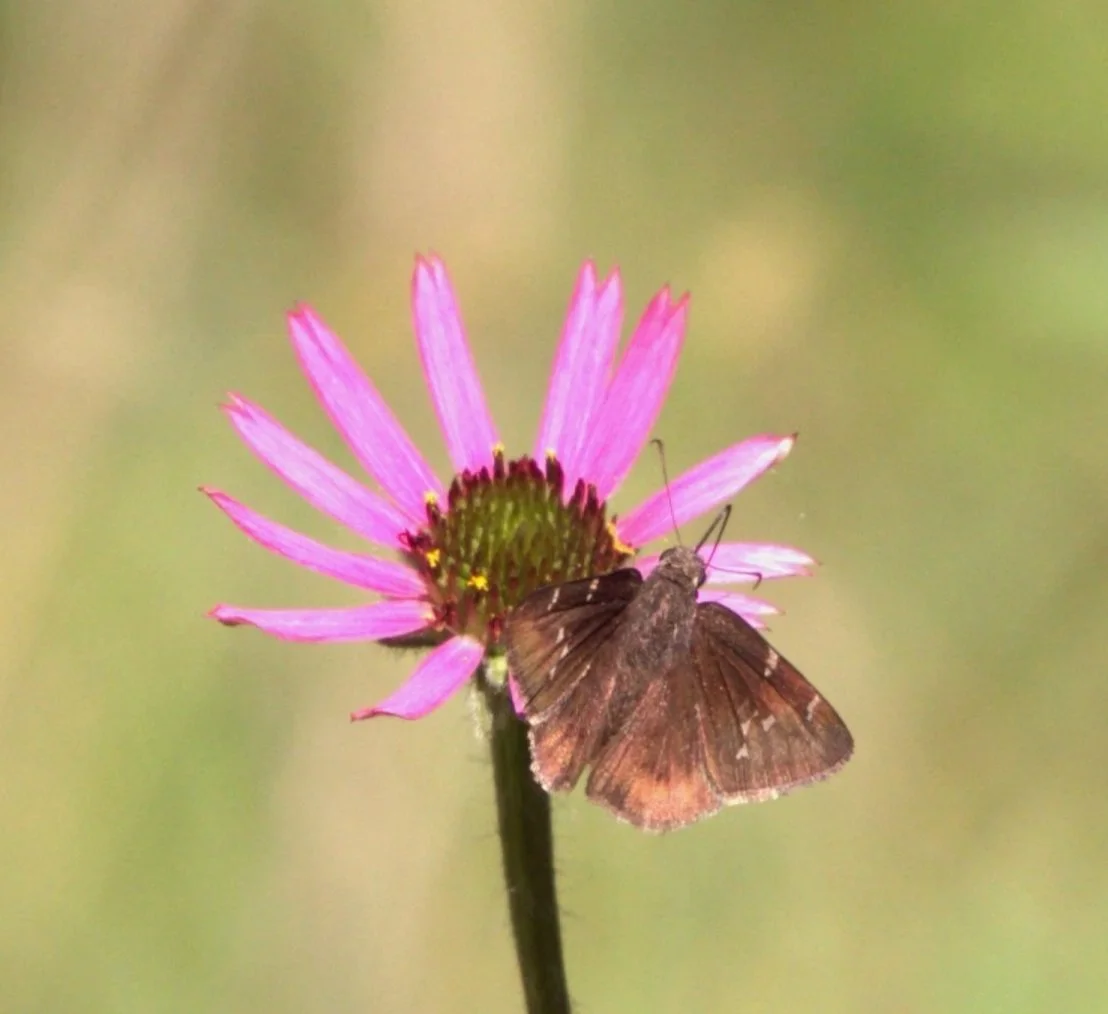
So I've gotten a little obsessed, and I'd like to make the case that the ground under our feet in Middle Tennessee is more important than we give it credit for, and that we are running out of time to act like it.The study that reframed this for me
In 2022, a team at the conservation nonprofit NatureServe, working with The Nature Conservancy, Esri, and Microsoft's AI for Earth program, built a high-resolution map of where America's most endangered species actually live. Not the vague, zoomed-out range maps we usually get, but a fine-grained picture of more than 2,200 imperiled plants and animals. Two findings from that study have stuck with me. The first is that roughly 90 percent of Americans live within about 30 miles of a place that's critically important for biodiversity. We tend to think of endangered species as a faraway problem, someone else's rainforest. Statistically, it's a down-the-road-from-your-house problem. The second is quieter but I think more important. Conservation maps have historically counted the charismatic stuff: birds, mammals, the animals that look good on a poster. This study deliberately went after the overlooked majority instead, and included plants, freshwater mussels, crayfish, and pollinators. Of the 2,216 imperiled species it modeled, 1,636 were plants. Only 309 were vertebrates. The animals we build our conservation instincts around are a rounding error in the actual list of what's in trouble. Then the researchers checked what the old way of mapping would have missed. If you draw the map of important unprotected habitat using only birds, mammals, and amphibians, the way most national and global assessments have always done it, you leave out 53 percent of imperiled freshwater invertebrates, 51 percent of imperiled fishes, and 42 percent of imperiled plants. More than half the mussels and the fish, gone from the map that was supposed to protect them. Not because anyone decided they didn't matter, but because nobody was counting them. And one of the biggest blind spots on the old maps was the Southeast. Which is to say, us.Where Tennessee stops being a supporting character
I need to put one more number in front of you, because when I found it I read it about four times to be sure.The study maps what it calls areas of unprotected biodiversity importance which are places where imperiled species with very small ranges are concentrated and where existing parks and reserves do not reach. For vertebrates, Tennessee has more of that land than any state in the country. Not the Southeast. The country. We come in ahead of California and ahead of Texas. Add in every other group the study covered — plants, freshwater mussels and crayfish, pollinators — and close to a fifth of Tennessee, 19 percent, falls inside one of those areas. On freshwater invertebrates alone, we're second in the nation, just behind Georgia.Sit with that. When you ask the question "where in America are there important species that nobody is protecting yet," the answer that comes back, at the top of the list, is here.That's not a distinction to be proud of, exactly. It means we have been coasting. But it does mean something specific and useful: if you want your effort to count for the most possible, the map says to do it in Tennessee.The Duck River
The Duck River alone supports around 60 species of freshwater mussels. The entire continent of Europe contains 16 freshwater mussel species in the order Unionida. A river you can canoe on a Saturday afternoon out-diversifies an entire continent in some areas. It does not stop there. The Duck holds 151 species of fish and around 22 kinds of aquatic snails, a number of which exist nowhere else on Earth. It stays this rich in large part because it runs free for most of its length. There's a dam up at Normandy, but below it the river was spared the wholesale damming and channelizing that flattened so many Southeastern rivers, so things can still move, spawn, and recolonize the way they're supposed to. The broader Tennessee River basin it belongs to is, according to The Nature Conservancy, the single most aquatically diverse river system in the United States. The Southeast as a region holds over 90 percent of the freshwater mussel species found in the United States, and close to half the world's crayfish species.
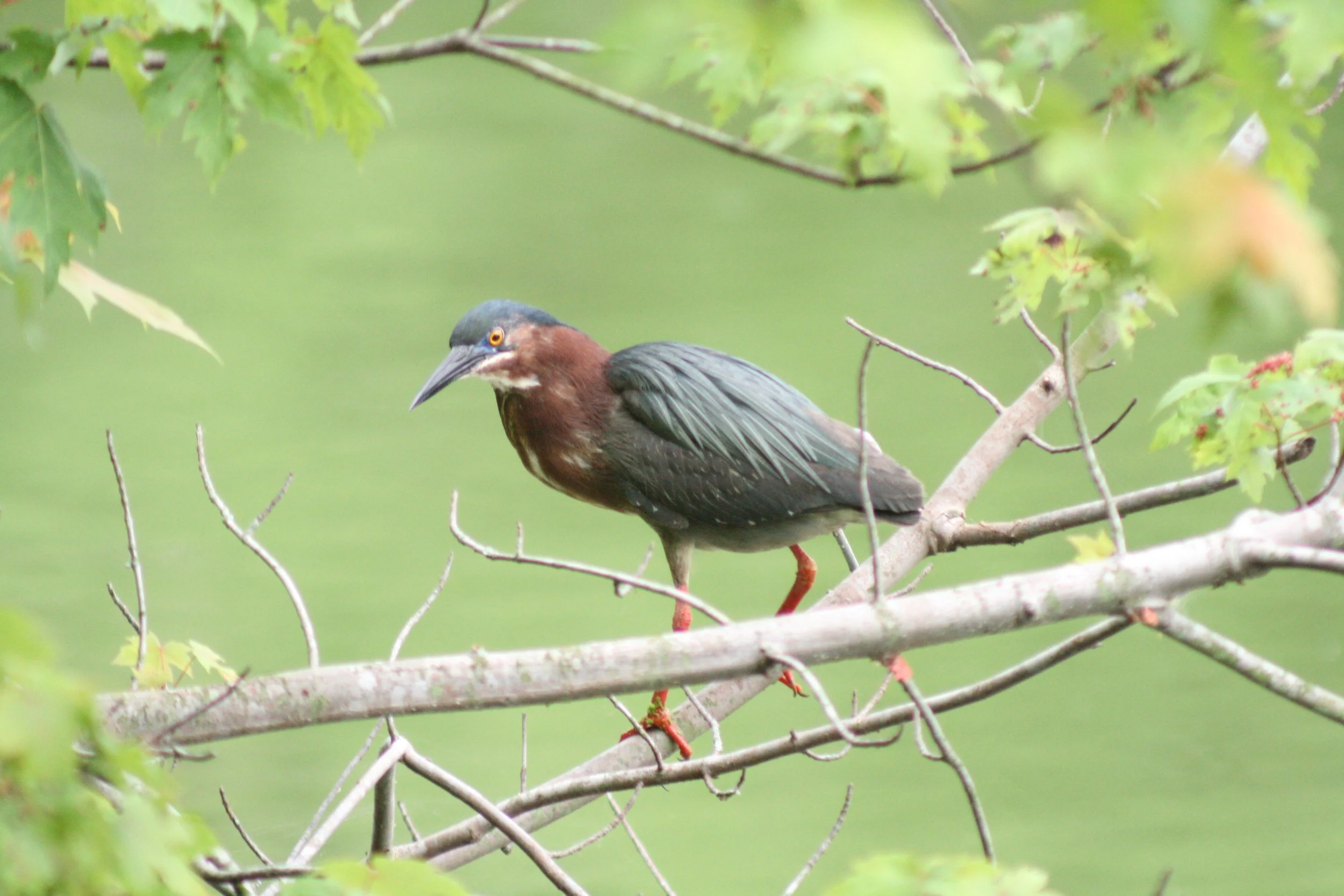
I have not had a chance to paddle the Duck yet, but I've stood in enough creeks around here to know what a healthy one feels like underfoot, and what a silted-in one feels like. If you are a resident of Tennessee, I am sure you have spent a day or two wading into a creek, relaxing on the bank of a stream, or floating down a river. These waterways give us life and make us feel connected to the Earth in a way our ancient ancestors likely did. These same waterways give life to hundreds of amazing species, many of which are rare or entirely endemic to this area.Now, "mussels" is not a word that makes most people lean forward, so let me try to convert you, because they converted me.A freshwater mussel is a small, tireless water-filtration machine. It sits on the river bottom and pulls sediment and pollutants out of the water as it feeds. A healthy mussel bed cleans the river continuously, for free, for as long as we let it. They're also the river's smoke detector. They're so sensitive to pollution that a thriving mussel community is one of the surest signs the water is healthy, and their disappearance is the early warning that something has gone wrong upstream.And they are disappearing. Around 70 percent of North America's roughly 300 freshwater mussel species are imperiled or already extinct. A recent assessment of the Duck, pulling from more than 7,000 records going back to the early 1800s, found that mussel diversity has declined at 85 percent of the sites surveyed. Three of our native mussels, with names too good to lose (the Cumberland moccasinshell, the Tennessee clubshell, and the Tennessee pigtoe), were proposed for federal endangered status in 2023. The Fish and Wildlife Service believes 87 populations of the moccasinshell, 83 of the clubshell, and 51 of the pigtoe are already gone.
That's the most biodiverse river system on the continent, quietly emptying out.Back to the flowers, because they are the hopeful part
The cedar glades carry the part of this story I find encouraging.

The glades are open, rocky patches in the Central Basin where limestone laid down hundreds of millions of years ago has weathered into soil so thin and harsh that ordinary plants can't hack it. Baking in summer, soggy in winter, basically rock with ambitions. Precisely because it's such a punishing place to live, it has produced a community of specialists: 25 plant species that grow in these glades and nowhere else in the world, plus a long list of others that are nearly as restricted.

The Tennessee coneflower is the headliner. It was thought extinct for decades until 1968, when Vanderbilt botanist Elsie Quarterman and her graduate student Barbara Turner found it growing in a glade outside Nashville. That rediscovery kicked off one of the great conservation comeback stories. It was listed under the Endangered Species Act in 1979, one of the first plant endemic to Tennessee to get that protection, and after three decades of patient, stubborn work by people who refused to let it go, it was taken off the list in 2011. Recovered. Still here.

That's the thing I hold onto. We have a worked example, right here, of a species that went from presumed gone forever to thriving because people decided to care and then did the work. It is not naive to think this is winnable. We have the receipts.

The glades' vulnerability is almost painfully simple. They're flat and treeless, which makes them easy to pave. Between sprawl pushing out from Nashville, old mining, and decades of suppressing the fires these systems actually need, they've been cut into fragments. And the Central Basin is growing fast.
Why Middle Tennessee is one of the best places in America to fight this
Put it together and the case is more motivating than depressing.

What we have here is globally irreplaceable, not just locally pleasant. A river immensely rich in fish, freshwater mussels, and crayfish. Flowers that exist in three counties on Earth. You cannot rebuild these somewhere else. It's here or it's nowhere.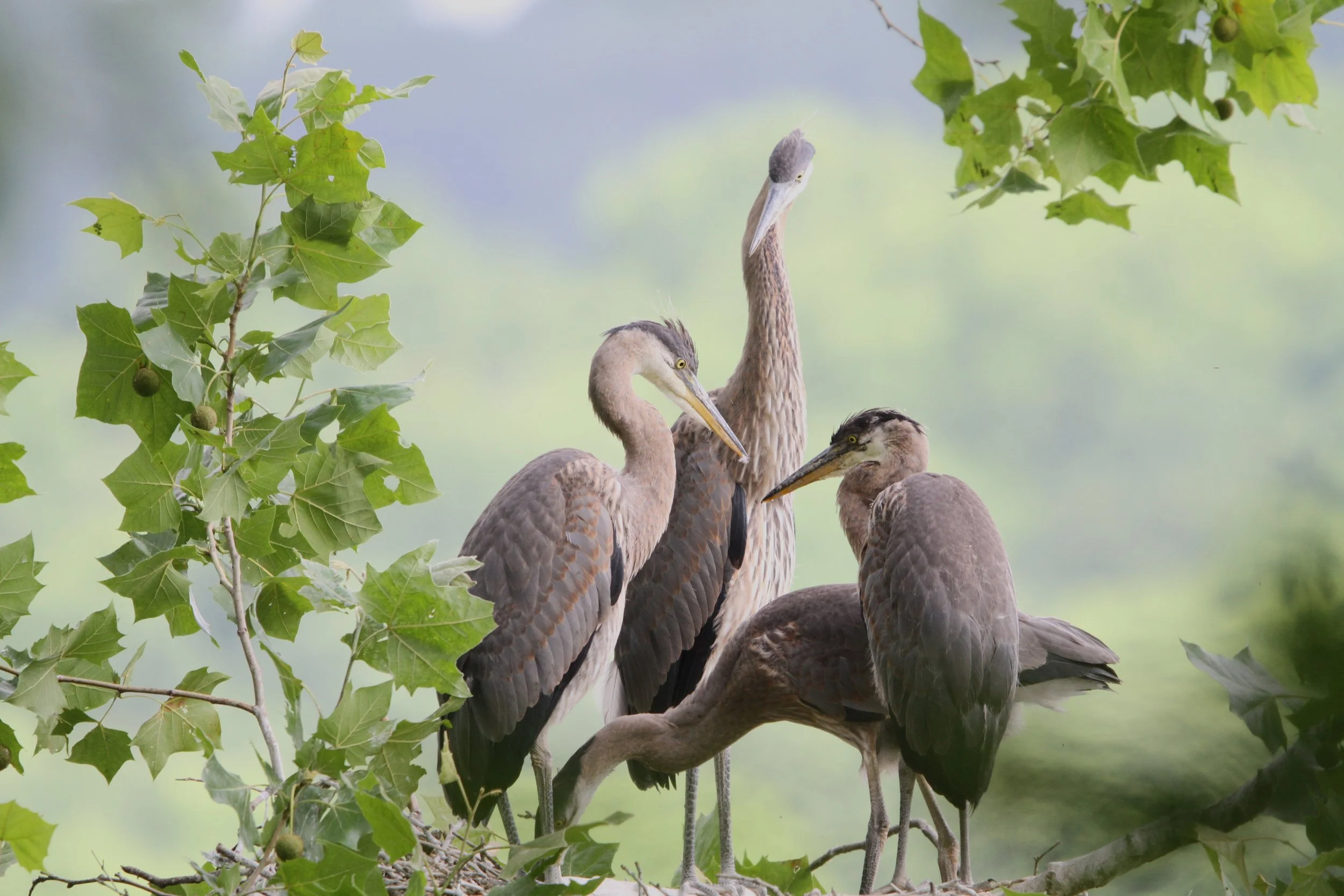
The protection gap is enormous, and that's actually the good news. Nationally, about 66 percent of the important unprotected biodiversity sits on private land. Part of why the Southeast is so exposed is just an accident of history: our imperiled freshwater species are concentrated here, and the big federally protected areas are mostly out West. That sounds bleak until you flip it. It means there is a lot of room left for new protection and restoration to do measurable good. We are nowhere near diminishing returns. Almost everything is still on the table.

And here is the finding that made me genuinely hopeful, buried in the same study. They measured two kinds of pressure on every species: how degraded the surrounding land is, and how much the climate has already shifted. Of the four groups they looked at, freshwater animals came out the worst on land degradation, which is the bad news and confirms everything above. But those same freshwater animals came out with the least climate exposure of any group. The threat to our rivers is not, at this moment, primarily a planetary force that Tennessee cannot influence. It is siltation, runoff, and what we do to the land next to the water. Those are local problems with local solutions. The paper's own conclusion is that if the climate pattern holds, keeping these rivers viable in the near term could be a realistic goal.
That is about as close as a peer-reviewed journal gets to saying: this one is actually winnable, and it's on you.
The wins are real and some of them already happened here. The coneflower came back. And right now, hatcheries at places like the Tennessee Aquarium Conservation Institute and the Cumberland River Aquatic Center are propagating endangered mussels and putting them back into the Tennessee and Cumberland systems. This is documented history and ongoing work, not wishful thinking.
And small things scale. Because so much of this hinges on water quality and on small, specific patches of habitat, ordinary local decisions matter more than they should. Keeping sediment out of a creek. Protecting a streambank. Planting natives instead of lawn. Supporting a prescribed burn on a glade. You don't need a national park to rewild Middle Tennessee. You can start at a fenceline.
We at Rewild Tennessee are focused on doing just that. We have started restoring habitat at our small plot of land in Brentwood, Tennessee and on a larger piece of land in Monterey, Tennessee. Nothing is better for increasing your level of hope and your overall mood then getting outside, planting some native plants, and witnessing the return of insects, birds, and sometimes even a fox.The ask
Protect the water first. Everything aquatic, every fish, every mussel, every unrepeatable thing in the Duck, lives or dies by what we let into the water. Riparian buffers, smarter development, watershed-scale thinking. That's the highest-leverage thing we can do.

Stand up for the glades. They need protection from bulldozers and active stewardship, including the fire they evolved with. Land trusts are out there acquiring and managing glade habitat right now, and they could use the backing.

Rewild your own ground. Most at-risk habitat is on private land, which means landowners are the front line, which means you might be the front line. Native plants, fewer invasives, a little wildness left intact. It adds up faster than you'd think.

Plug into the people already doing this. Tennessee has land trusts, native plant societies, watershed groups, university researchers, and state natural-areas staff who have been at this for years. You don't have to start anything from scratch. Show up, volunteer, donate, amplify.

And know this stuff, and tell someone. A lot of conservation fails for the dumbest reason: people had no idea what was at stake in their own county. Knowing that one of the most biodiverse rivers in North America runs near you, that there are flowers here that grow nowhere else on Earth, is itself the first act of protection. Half the battle is getting Tennesseans to look down and realize what we're standing on.

We don't have to go anywhere to find the wonder. It's already here, under the limestone and moving through the water, the slow patient product of millions of years, concentrated in our corner of the map in a way most of the planet can only envy.The science is about as clear as science gets. This is one of the best places in the country to make a stand for biodiversity, and the stand is winnable. The only missing ingredient is enough of us deciding that it's ours to make.
Sources, if you want to go down the rabbit hole yourself: NatureServe's Map of Biodiversity Importance and the study behind it (Hamilton et al., "Increasing Taxonomic Diversity and Spatial Resolution Clarifies Opportunities for Protecting US Imperiled Species," Ecological Applications, 2022), which is where the numbers on imperiled species, private land, and Tennessee's national ranking come from; The Nature Conservancy's work on the Duck River and the Tennessee coneflower; the U.S. Fish and Wildlife Service's historical assessment of Duck River mussel communities and its 2023 proposed listing of the Cumberland moccasinshell, Tennessee clubshell, and Tennessee pigtoe; the Xerces Society on the status of North American freshwater mussels; the Tennessee Aquarium Conservation Institute on mussel propagation; the Center for Cedar Glade Studies at MTSU; the Tennessee Encyclopedia; and TennGreen Land Conservancy.
